
The first is a series of clear, uncomplicated “Beat the Heat” safety precautions to safeguard yourself against extreme heat.
The second sets out heat-related symptoms, making it easy to spot warning signs such as heat exhaustion and heatstroke.
Severe High Temperature Warning: Everything You Need to Know
Heatwaves might be far more threatening than being merely uncomfortable. A Severe High Temperature Warning notifies everyone that it is going to be extremely hot—and the warning needs to be heeded.
What Is a Severe High Temperature Warning?
A Severe High Temperature Warning is one that is released by weather agencies when the temperature is predicted to become unsafe for a number of hours or even days. It’s an indication for individuals to get ready and shield themselves.
Based on the area, such a warning is typically issued when temperatures exceed critical values—commonly around 40 °C (104 °F).
Why Extreme Heat Is Hazardous
- Health Hazards
Heat Exhaustion: Symptoms are profuse sweating, dizziness, weakness, headache, and nausea.
Heatstroke: It is an emergency condition that may be fatal. Watch for extremely high body temperature, confusion, rapid pulse, or loss of consciousness.
Dehydration: Overheating without liquid replacement can cause severe problems.
(See the second infographic above for symptoms.)
- Impact on Everyday Life
Power Outages: Overuse of fans and air conditioners can overload power grids.
Water Shortages: Additional water is consumed for hydration and cooling.
Transportation Issues: Heat can damage roads and rail tracks.
- Environmental Effects
Wildfires: Vegetation dries out and fires become more likely.
Crop Loss: Plants are damaged by extreme temperatures and food supplies dwindle.
Who Is Most At Risk?
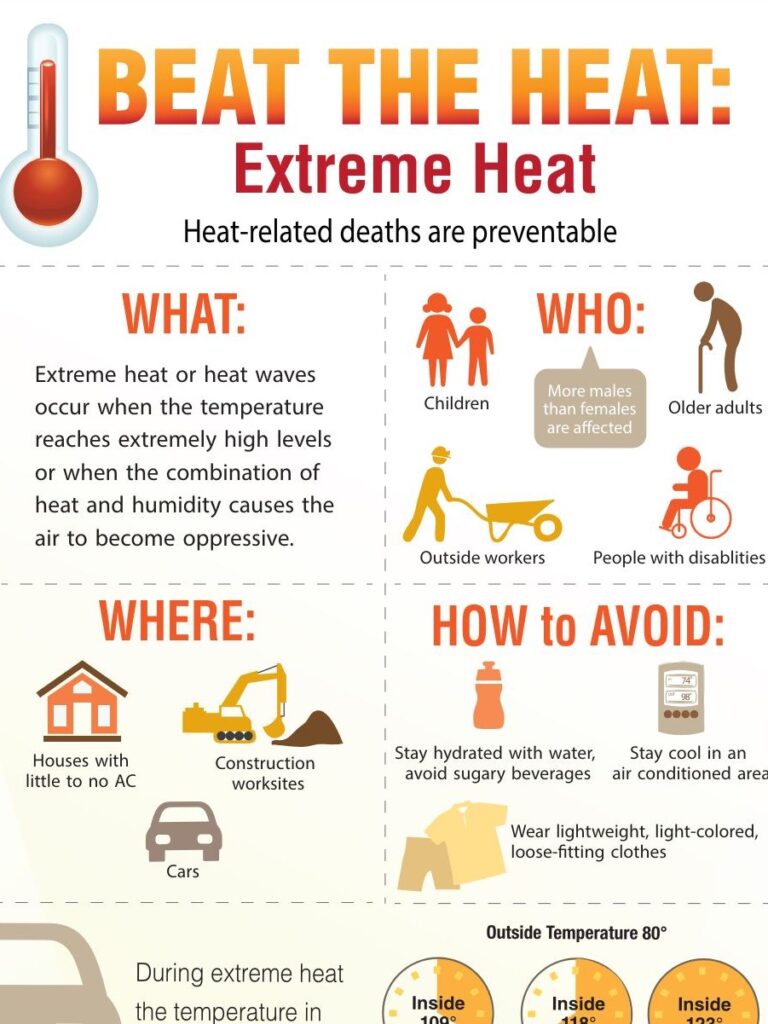
Elderly People: May struggle to regulate body temperature.
Children: Their bodies overheat more quickly.
Individuals with Health Issues: Especially those with heart or breathing conditions.
Outdoor Workers: Construction workers, farmers, delivery personnel, etc.
How to Stay Safe in Severe Heat
- Drink Plenty of Water
Even if you’re not thirsty, drink water frequently. Avoid alcohol and strong caffeine, which can contribute to dehydration.
- Stay Cool During Peak Hours
Between 11 AM and 4 PM is typically the most hot time. Remain indoors, in shade, or air-conditioned rooms.
- Dress Smart
Wear light-colored, loose clothing made of air-permeable fabrics such as cotton.
- Use Cooling Methods
Employ air conditioning or fans if available. Cool showers, wet towels, and shade can also be used.
- Watch for Warning Signs
Watch for signs of heat illness in yourself and others. Know what to do if symptoms occur.
- Check on Others
Make sure elderly relatives, neighbors, or friends are okay and are staying cool. Children and animals shouldn’t be left in hot areas or cars.
- Follow Official Advice
Listen to local authorities: they might establish cooling centers, limit outdoor activities, or issue water-saving regulations.
Why It’s Getting Hotter
Climate change is increasing the occurrence and severity of heatwaves. Global warming translates to Severe High Temperature Warnings becoming more frequent. That makes learning and adhering to heat safety guidelines more important than ever.
A Severe High Temperature Warning is a call to act immediately. Heat is dangerous to everyone, but precautions—such as staying hydrated, cool, and alert—can be lifesaving. Be mindful, be wise, and encourage others to stay protected as well.
