
Nature’s Lovely Evening Spectacle
The Perseids Meteor Shower, or ペルセウス座流星群 in Japanese, is perhaps the most well-known and lovely meteor shower on the planet. In August each year, folks from all over the globe gaze up at the evening sky to see scores of shooting stars streaming across the cosmos. It is a unique moment when nature stages a beautiful spectacle for all to marvel at.
What is the Perseids Meteor Shower ペルセウス座流星群?
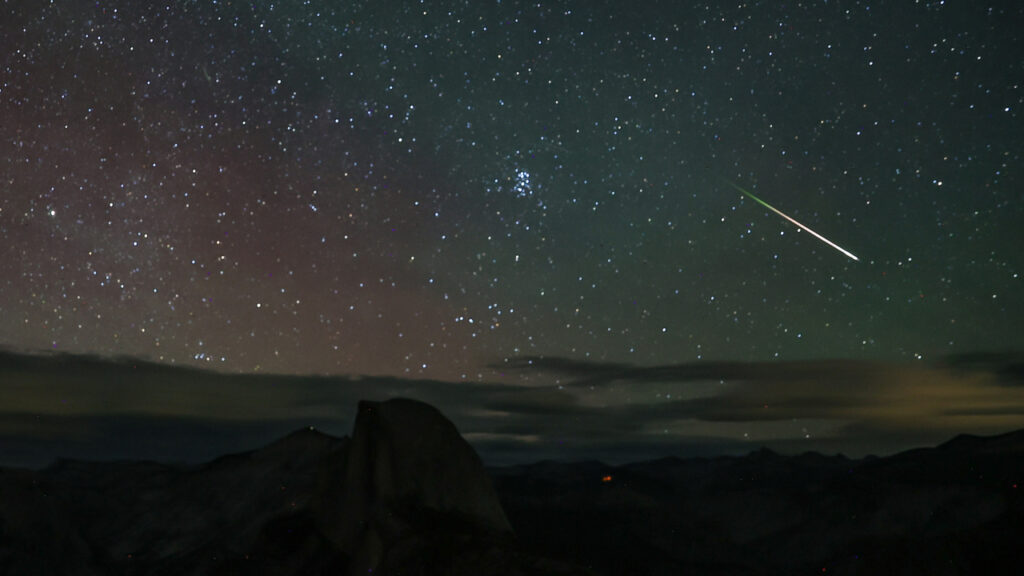
A ペルセウス座流星群 meteor shower occurs when tiny space rocks or debris enter the Earth’s atmosphere and burn up, producing bright streaks of light in the sky. The Perseids are so called after the constellation Perseus, since the meteors appear to emanate from that region of the sky.
The Perseids are composed of small fragments of a comet known as Swift-Tuttle. The comet orbits the Sun, and whenever it gets close, it sheds a trail of dust and small stones. When we pass through this trail in August, we observe the stunning meteor shower.
When Does It Occur?
The Perseids ペルセウス座流星群 typically are visible between July 17 and August 24, but the best time to observe them is on the peak nights around August 11–13. These are the nights when you can observe most meteors, at times even as many as 100 per hour if the sky is absolutely dark and clear.
Why Are the Perseids So Popular?
Perseids are fast, colorful, and radiant. They leave a trail which is glowing for some seconds, so they are simple to spot. In addition, August weather is generally warm in the Northern Hemisphere, so observers can enjoy them comfortably without heavy winter attire.
How to Watch the Perseids Meteor Shower ペルセウス座流星群
Observing the Perseids does not require any special hardware such as a telescope. All you need is your eyes and a good spot with an open sky. Here are some recommendations:
- Get to a Dark Spot – Move away from city lights to observe more meteors.
- Face the North-East Sky – This is where the Perseus constellation lies.
- Be Patient – It can take 15–20 minutes for your eyes to acclimatize to darkness.
- Lie Down Comfortably– Use a blanket or a recliner chair to view the sky comfortably.
- Check the Weather – Ensure the sky is clear with no clouds.
Interesting Facts About the Perseids
The meteors ペルセウス座流星群 move very quickly, around 59 kilometers per second.
The Perseids have been seen for more than 2,000 years.
Some meteors are bright enough to cast shadows on the ground.
The Swift-Tuttle comet, which produces the Perseids, takes 133 years to travel around the Sun.
Safety Tips for Watching
Watching meteors is safe, but be careful if you are going to a remote or dark place at night. Bring a flashlight, some snacks, and let someone know where you are going.
Why You Should See It
Perseids are more than a science phenomenon—they’re an opportunity to connect with the universe. Observing shooting stars can be enchanting, and it’s not uncommon for people to make wishes when they spot one. It is a wonderful activity to do with friends and family.
